No content results match your keyword.
Content

You have successfully logged out.


Not registered yet?
Saturday, 9 August 2025
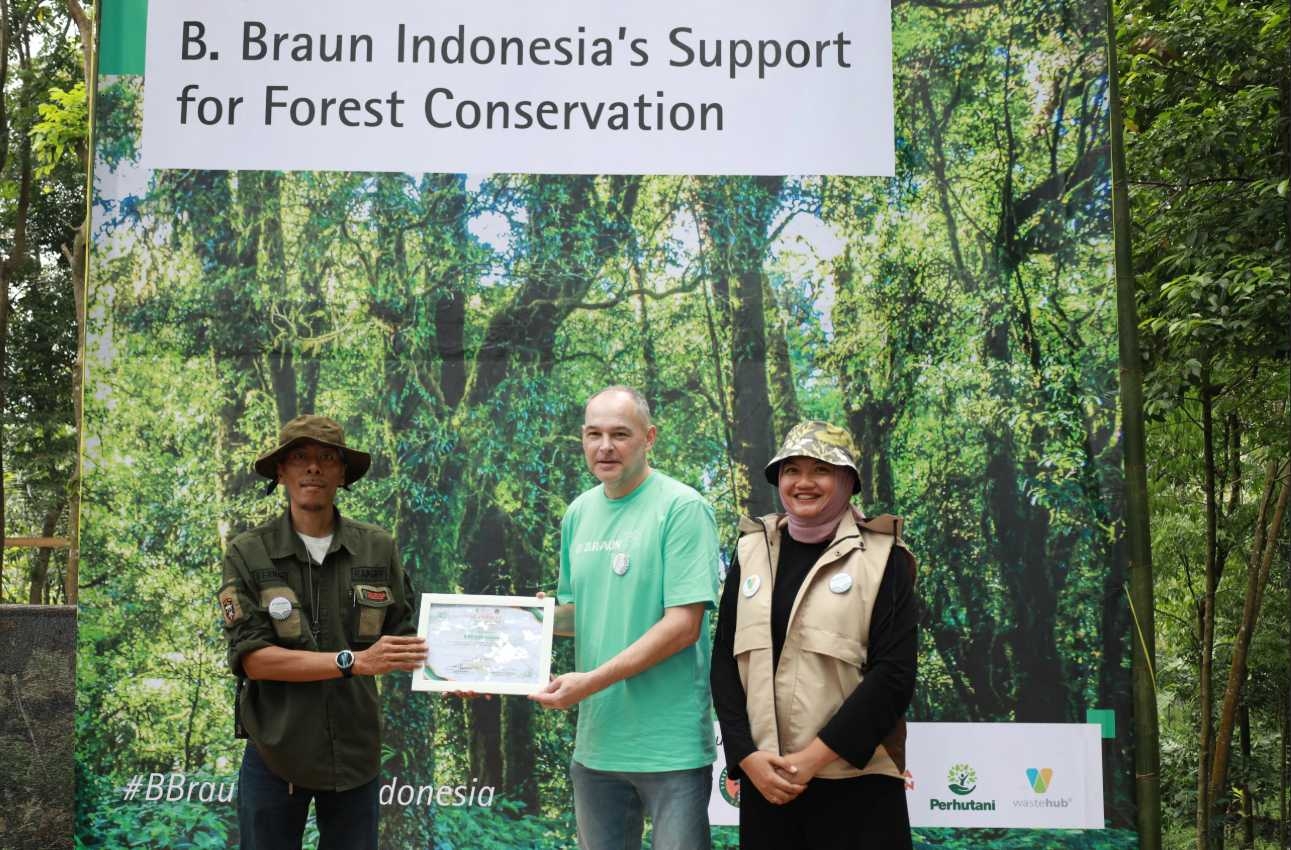
In celebration of National Nature Conservation Day, over 100 B. Braun Indonesia employees volunteered to help rehabilitate the Sanggabuana forest and protect the ecosystem for local wildlife.
Karawang, August 9, 2025 – B. Braun Indonesia, a leading medical technology company headquartered in Germany, reaffirmed its commitment to environmental responsibility through a tree planting initiative in the Sanggabuana Mountains, Karawang, West Java. This activity was part of the company’s Corporate Social Responsibility (CSR) program and commemorated National Nature Conservation Day, observed annually on August 10. The goal was to preserve the forest ecosystem and create a positive impact on the surrounding environment.
More than 100 B. Braun Indonesia employees voluntarily participated in planting 500 endemic tree seedlings and cleaning up hiking trails in the Sanggabuana forest. The tree species planted included puspa, rasamala, banyan, salam, picung, African mahogany, sugar palm, durian, petai, jengkol, kecapi, and trembesi. These species were selected for their high ecological value and direct benefits to the environment and local food security.
Rainer Ruppel, President Director of B. Braun Indonesia, expressed his enthusiasm for the initiative. “We believe that maintaining ecological balance is a shared responsibility. Through this activity, we aim to inspire tangible actions in forest conservation, which is vital for both wildlife and local communities. The active participation of our employees reflects a collaborative spirit toward a greener future,” he said.
“Furthermore, B. Braun Indonesia actively encourages its employees to contribute to society through volunteerism, especially in environmental conservation efforts like today’s event,” Rainer added.
The Sanggabuana Mountains span 16,500 hectares and serve as a habitat for approximately 477 wildlife species. Of these, 47 are protected species, and 248 are listed on the International Union for Conservation of Nature (IUCN) Red List, which identifies species at risk of extinction. Five of these species are critically endangered, and ten are endangered. One of the key areas within this region is the Dindingari Block, home to five endemic primate species of Java: the Javan gibbon, Javan lutung, surili, Javan slow loris, and long-tailed macaque. Unfortunately, many of their natural food trees have been lost due to land conversion, making forest rehabilitation crucial.
Bernard Triwanarta Wahyu Wiryanta, Founder of the Sanggabuana Conservation Foundation, welcomed the initiative. “The planting of 500 trees by B. Braun Indonesia is a concrete step that we fully support in efforts to restore the Sanggabuana forest ecosystem. Beyond its ecological value, the diverse tree species planted also offer direct benefits to the livelihoods and food security of surrounding communities,” he said.
Through this initiative, B. Braun Indonesia reinforces its commitment to environmental conservation and promotes cross-sector collaboration for the sustainability of Indonesia’s natural resources. At B. Braun, we believe that environmental responsibility is an integral part of our long-term vision to improve health and quality of life. The forest rehabilitation efforts in the Sanggabuana region reflect this commitment—not only by contributing to ecosystem restoration but also by supporting resilience and delivering tangible benefits to local communities. This action is part of our broader goal to create a positive and sustainable impact through responsible corporate practices.